India's Digital Dream: Can a Tech Stack Truly Unify Its Tourism?
India's ambitious new 'Digital Tourism Stack' promises to transform a highly fragmented market, yet its true success hinges on integrating small operators and solving deep-seated issues beyond technological fixes.
AI-generated image
India, a land of unparalleled diversity and immense travel potential, has long grappled with a paradox: a vibrant, growing tourism market that remains stubbornly fragmented. For years, the experience of navigating its vast offerings has been a patchwork, often favoring major players and leaving countless hidden gems undiscovered by the average traveler. Now, a new initiative — India’s 'Digital Tourism Stack' — enters the scene, promising to be the digital architect of unity. But can a technological solution truly mend what has historically been a systemic challenge?
The newly unveiled Digital Tourism Stack is designed as open digital infrastructure, leveraging an AI-first approach to make the country's extensive tourism supply easier to discover and book for everyone, not just those sticking to established routes. The goal is clear: to connect flights, hotels, homestays, local experiences, and other tourism services into a more cohesive network, ultimately improving trust and digital access, particularly for smaller businesses. On the surface, this sounds like a monumental step forward for a market that was estimated at approximately USD 19.2 billion in 2025 and is projected to reach around USD 20.8 billion in 2026, with forecasts pointing towards a substantial growth to USD 75.3 billion by 2035.
The Promise of Digital Connectivity for All
At its core, the Digital Tourism Stack represents India's bet on open digital infrastructure to streamline an industry characterized by its scattered nature. By building what Skift describes as a platform to surface previously hard-to-find options, the country hopes to simplify the entire travel journey. This isn't an entirely new aspiration; a decade ago, reports highlighted the need for initiatives like a national tourism board to unify the industry, acknowledging the multiple market and coordination failures that historically prevented India from capturing a larger slice of the global tourism pie, holding only about 1.2 percent. The stack aims to bring together elements from visas and bookings to verified stays, all via a single API, potentially creating a much more connected travel planning ecosystem. For travelers, this could mean less time sifting through countless websites and more time experiencing India.
Empowering the Undiscovered Experiences
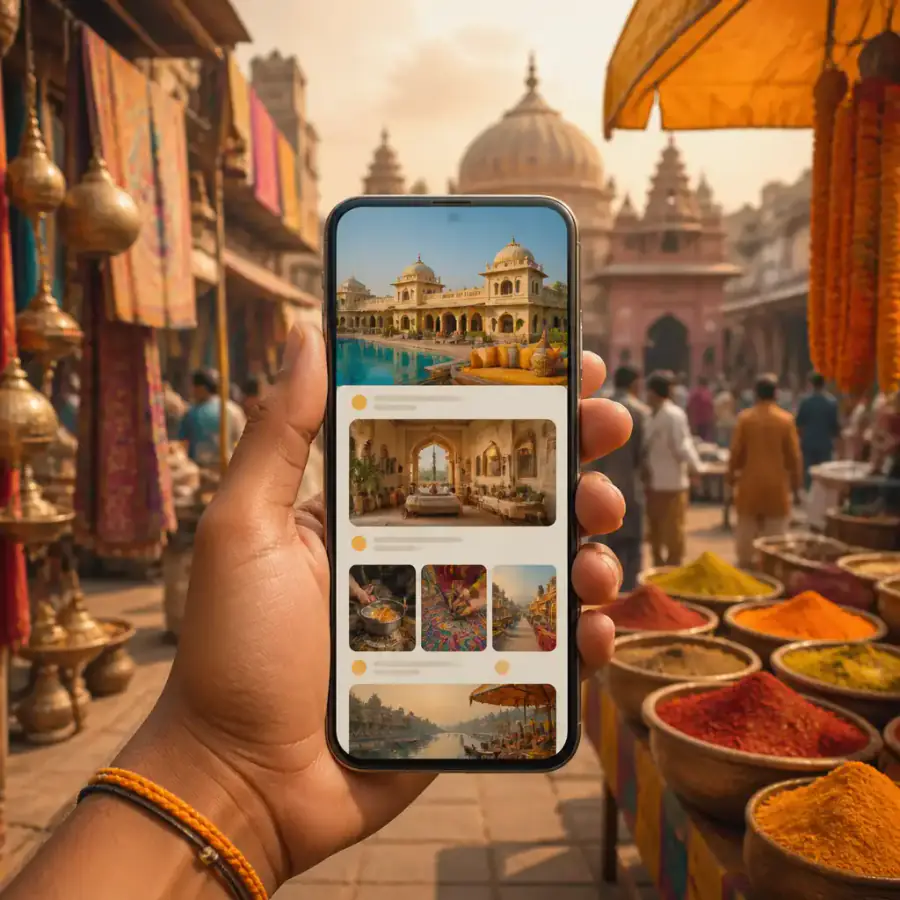
One of the most compelling aspects of this new digital initiative is its stated focus on smaller tourism businesses. The stack aims to enhance discovery and digital access for homestays, local experiences, and transport providers that often operate outside the purview of large online travel agencies. This is particularly significant in a country where market segmentation is a crucial aspect of understanding tourist behavior, and niche tourism creates openings for unique experiences. Imagine effortlessly finding an authentic homestay in a remote village or booking a local cultural tour directly from your device, bypassing layers of intermediaries. This direct access could not only empower local entrepreneurs but also enrich the traveler's experience, moving beyond the usual suspects of major hotels and attractions to reveal the true depth of India's hospitality and culture.
Addressing Systemic Fragmentation, Not Just Digital Gaps
While the technological ambition is commendable, the real challenge for the Digital Tourism Stack will be to address the underlying systemic issues that have historically contributed to market fragmentation. Fragmentation in Asian travel markets is widespread, and simply providing a digital platform, even an AI-first one, doesn't automatically solve issues of inconsistent service quality, infrastructure gaps, or regulatory hurdles that might deter smaller operators from fully participating. The stack must prove itself capable of fostering an environment of trust and reliability across its diverse user base. For travelers, the ultimate success will be measured not just by the sheer volume of options available, but by the seamless quality and consistent experience offered, regardless of whether they book a five-star hotel or a local guesthouse.
Ultimately, India's Digital Tourism Stack is a bold and necessary move to modernize its travel industry. If implemented with careful consideration for its diverse stakeholders and a genuine commitment to addressing historical market failures, it has the potential to be a truly transformative force. For travelers eyeing India, it promises a future where authentic, local experiences are as accessible as the iconic landmarks, opening up new possibilities for exploration beyond the well-trodden path. However, the journey from a fragmented past to a unified digital future is long, and the tech stack, while a powerful tool, is but one part of the solution.
No topics yet: start the first one.