Big Bend shows a park is only protected until the next ruling
The Supreme Court cleared border barriers in a West Texas region that includes Big Bend National Park. Protected status is fragile, so go see these places and speak up.
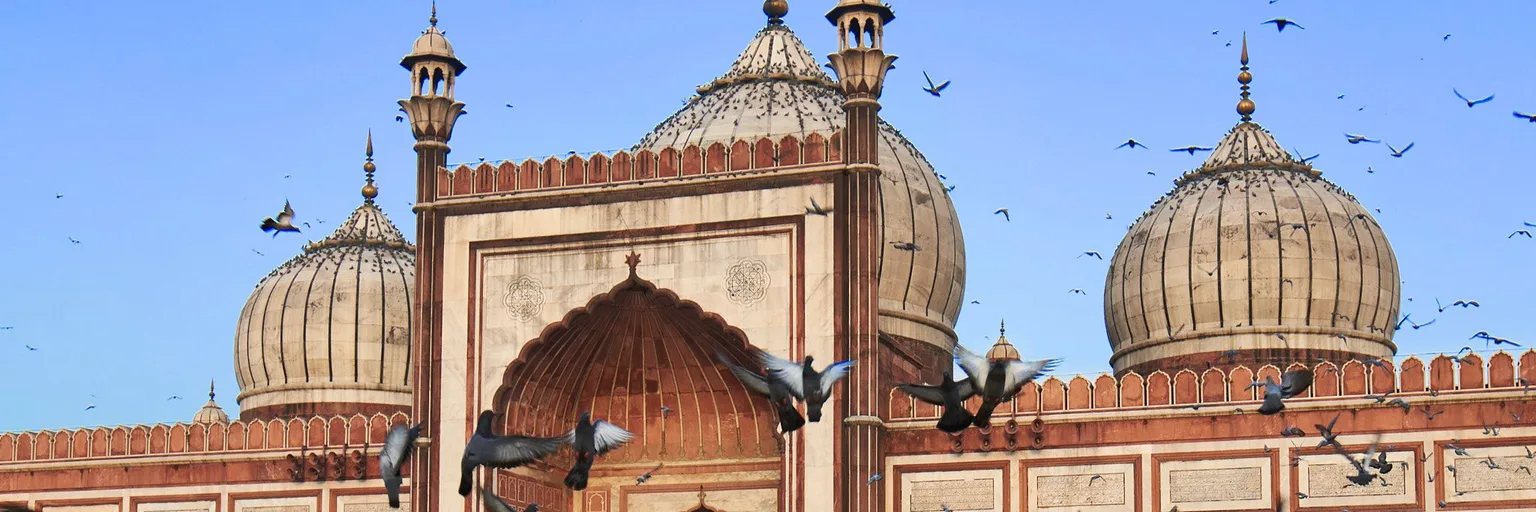
Photo: Yinan Chen / Wikimedia Commons (Public Domain)
What does "national park" actually promise? For a long time, many of us read it as a guarantee: the canyon, the river and the silence would be there when we got around to visiting. Monday's Supreme Court order suggests a more modest reading. It is a promise that holds until someone with enough authority decides otherwise.
The court sided with the wall, at least for now
As Reuters reports, the Supreme Court granted the administration's emergency request to lift a federal judge's order that had halted border wall construction in a remote stretch of West Texas that includes Big Bend National Park. The lawsuit continues, but work can resume in the meantime. The court wrote that the government's interest "outweighs any aesthetic, recreational and environmental harm alleged by respondents." Justice Ketanji Brown Jackson was the only member of the court to publicly dissent.
The administration says most construction across the sector, which spans more than 300 miles, will be on private land. The park itself would get a 17-mile noncontiguous vehicle barrier system, not the 30-foot pedestrian barrier planned elsewhere. Those are the government's claims. Crews had already begun clearing land in the park before construction was paused in August.
The legal detail matters more than the steel
The most worrying part, in our view, is not the length of the barrier. It is the mechanism. The work rests on Homeland Security waivers that avoid the application of a variety of environmental and conservation laws. The court said the 1996 law behind them likely precludes judicial review of the plaintiffs' claims.
Read that as a traveler. The rules that make a park feel safe, such as environmental review and species protection, can be set aside by an executive waiver, and courts may not be able to look at it. The district judge had noted that Big Bend has by far the lowest rate of migrant apprehensions on the border, and warned that the same logic would let the waiver authority apply to the entire US-Mexico border. That is her reasoning, not a settled outcome, but it should give anyone who loves border landscapes pause.
What visitors can lose, and what they can do
We should be careful. We don't know exactly what a vehicle barrier and new roads will do to the river corridors, the wildlife movement or the feel of the place. The Center for Biological Diversity warns of bulldozed desert and dynamited canyon walls. That is an advocacy group's assessment, and the administration's own account is that most work will be on private land. But the plaintiffs also include a river guide and a group trying to save a fragile adobe church in Ruidosa, which tells you the stakes are practical and local, not abstract.
Our recommendation has three parts:
- Go, and go well. Visit Big Bend and similar border areas while access is predictable. Check current park and road conditions with official sources before you travel, because construction can change them and we can't promise what will be open.
- Spend locally. Guides, lodging and small businesses in gateway towns are the people with the strongest stake in the landscape staying intact.
- Speak up. The opposition has already been bipartisan, with local officials and even some Texas Republicans objecting. That suggests public pressure has traction. Write to your representatives and support the groups litigating. The case is still live.
Don't wait for the final ruling
The tempting response is to treat this as a political story and keep planning the trip for "someday." We think that is the wrong lesson. Protected-area status is an agreement renewed through attention, and attention comes from visitors who show up, stay in nearby towns and then say something afterward.
Our verdict: Big Bend has just moved from the "assumed" list to the "worth doing soon" list. See it, tell people what you saw, and don't confuse a park boundary with a permanent shield.
No topics yet: start the first one.
More stories
A bottle of Sardinian sand is not a souvenir, it's a theft
A 74-year-old tourist was stopped at Porto Torres with 10 kg of labeled sand. The fines and port checks are right: beaches are heritage, not gift shops.
Disneyland Paris wins, but France's best park may not be the polished one
Disneyland Paris dethroning Parc Astérix at the Parcs Fans Awards says less about quality than about what we reward. Here is how to choose where to spend your days.
Albacete bets on darkness, and the label is only the start
Albacete's Starlight certification across all its comarcas is a smart bet on dark skies, but it only pays off if lighting rules and visitor infrastructure follow.
India is Destination of the Year 2027, but nobody should visit "India"
Travel + Leisure's crown is a good reason to take India seriously, but a country this vast rewards one region and one season, not a checklist.