EU's Free Carry-On Promise: More Nuance Than Meets the Eye
The EU's recent overhaul of passenger rights introduces critical changes, but the highly anticipated universal free main carry-on bag remains a complex issue, challenging earlier widespread reports.
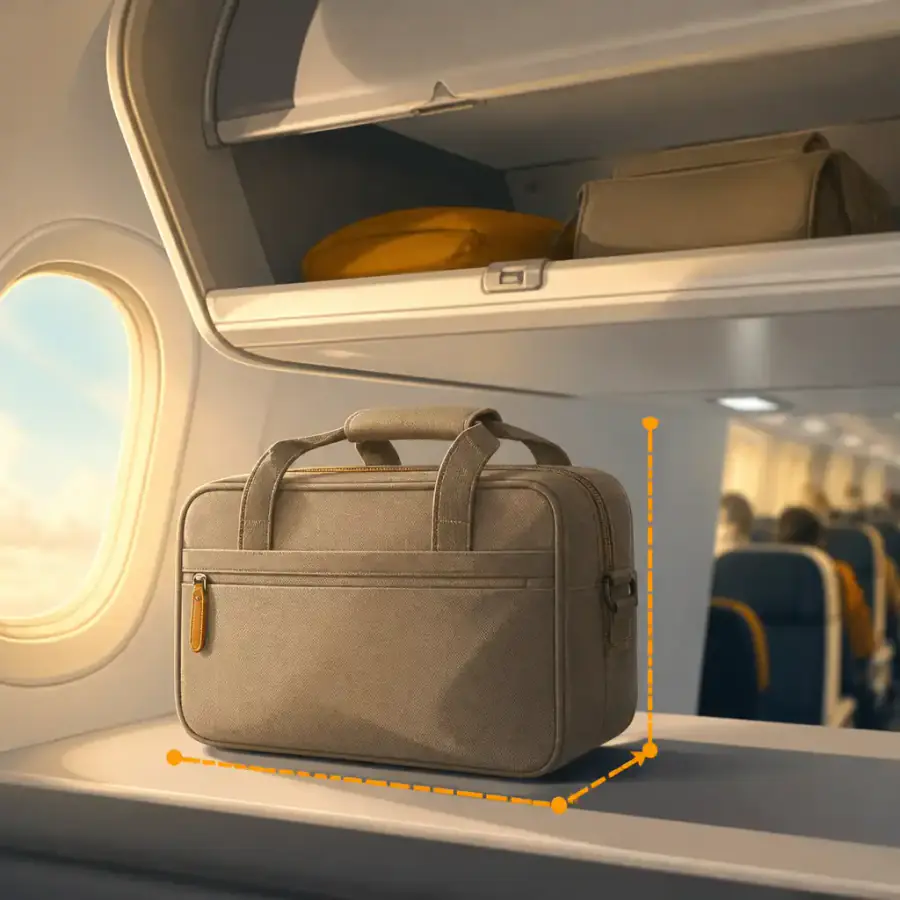
AI-generated image
For years, budget airlines have transformed air travel into a menu of optional extras, with cabin baggage often becoming a significant, unexpected cost. Now, the European Union is stepping in, ostensibly to level the playing field for travelers. But will the newly reformed passenger rights truly be a game-changer, or will the details prove to be more nuanced than initial reports suggested?
The European Parliament recently approved a sweeping reform of air passenger rights, building on a vote by lawmakers on a proposal in June 2025. This initiative aims to standardize regulations across EU airports and airlines. The changes, which resolve a 13-year legislative stalemate (AviationBusinessNews), will extend to all flights within the EU, as well as routes to and from the EU, once adopted following negotiations.
While early proposals and some reports suggested a universal entitlement to a free main carry-on bag (e.g., up to 7 kg), the final text of the approved regulation, as reported by RTVE and Traveltienda, does not include a universal obligation for airlines to offer a main hand luggage item free of charge. What is confirmed and mandated is a free smaller personal item, typically measuring 40cm x 30cm x 15cm, which can be stored under the seat (BBC, Liligo, VoyagesPirates). Some airlines, particularly with standard tickets, may offer two pieces of hand luggage free of charge, as Euronews reported, but this appears to be a matter of airline offering rather than a universal legal mandate for all ticket types.
This broad reform also encompasses other crucial passenger protections. Lawmakers voted to prohibit airlines from imposing seat selection charges for children aged 12 and under, aiming to ensure families can sit together without incurring additional costs. Furthermore, officials seek to ensure that travelers are entitled to compensation not just when airline delays cause them to miss connecting flights, but also when a delay causes them to miss a connection on another mode of transport if the ticket is purchased through one operator (BBC).
The Reality of Free Carry-On: A Mixed Bag
Initial excitement around the
No topics yet: start the first one.
More stories
Korean Air-Asiana Merger: A New Era for Asian Travel, But For Whom?
The integration of Korean Air and Asiana Airlines heralds a significant shift in Asian aviation, promising an expanded network and premium experience but raising questions about market competition and passenger impact.

American Airlines' Starlink Bet Redefines In-Flight Connectivity
By committing to equip its entire mainline fleet with Starlink Wi-Fi, American Airlines is intensifying the competition for high-speed internet in the skies and setting a bold new benchmark for passenger expectations.
EU Air Passenger Rights: A Real Win for Travelers, If Enforced
After 13 years of negotiations, the EU has updated its air passenger rights, promising clearer protections and compensation, but their real impact hinges on consistent enforcement.

Airline Consolidation vs. Connectivity: Who Wins for Travelers?
While new routes and high-speed Wi-Fi promise a better journey, the rising market power of a few major airlines presents a paradox for passenger choice and fares.