Air Travel for Wheelchair Users: Still a Battle, Not a Right
Despite assurances from airlines and legal frameworks, the journey for travelers using wheelchairs remains fraught with systemic challenges, exposing a stark divide between policy and lived experience.
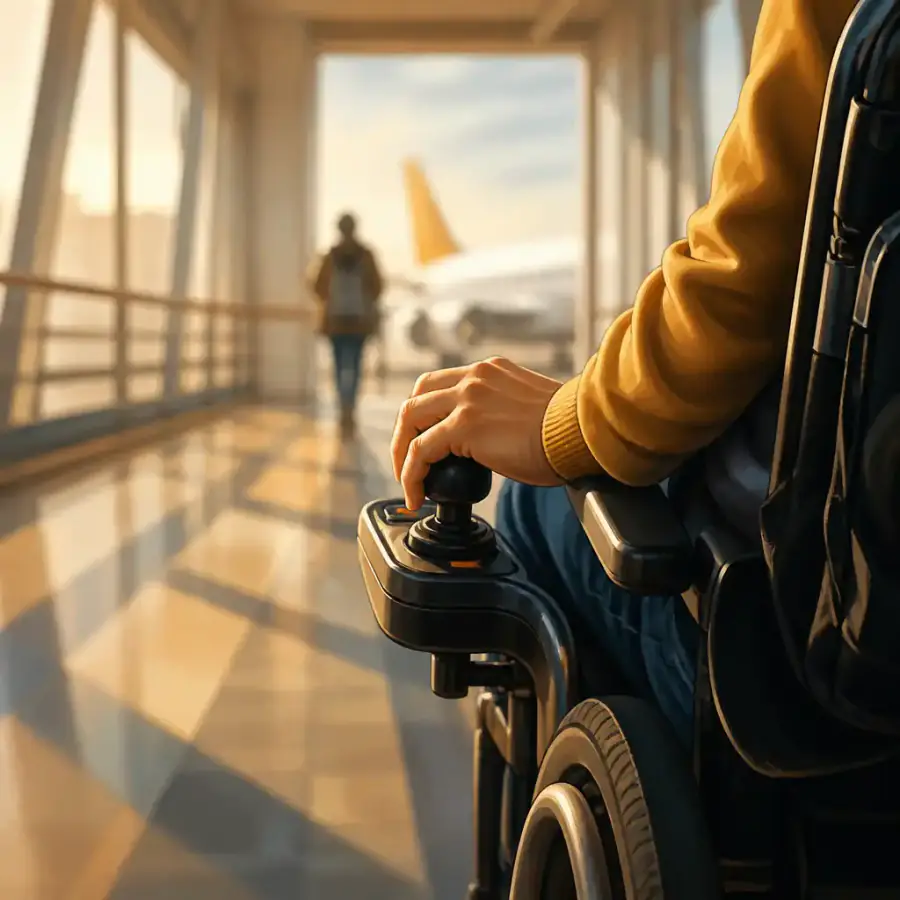
AI-generated image
“Why must I always fight for the right to travel?” This poignant question, recently posed by Mikdar M'dallah-Mari, a wheelchair user, cuts to the core of a persistent problem in the travel industry, as reported by Outre-mer La 1ère. Despite advancements in accessibility awareness and the existence of specific services, air travel for individuals with disabilities often remains a significant challenge rather than a seamless experience. It’s a stark reminder that while policies exist on paper, their consistent execution is where the industry frequently falls short.
Indeed, airlines like Air France, for example, outline extensive support for passengers with disabilities. They promise assistance throughout the journey, a dedicated Saphir service, trained cabin crew, and even the free transport of wheelchairs and other special equipment, provided customers indicate their needs at least 48 hours before departure. Paris Aéroport also states that travelers can use their personal wheelchairs up to the plane door, a seemingly practical measure. Yet, the reality, as voiced by M'dallah-Mari, suggests these provisions don't always translate into a smooth travel day for those who rely on them.
The Lingering Chasm Between Promise and Reality
It’s tempting to view official airline policies as a comprehensive solution, but the experiences of many wheelchair users tell a different story. The detailed guides available for disabled travelers, such as those on wheelchairtravel.org, reveal a complex landscape of potential hurdles. From the initial booking process—which often requires precise communication of mobility aid needs and understanding of various assistance codes—to navigating security screenings and boarding procedures, every step presents an opportunity for miscommunication or inadequate support. The fundamental discrepancy lies in the sheer volume of variables and the critical importance of meticulous planning. Guides like the one from wheelchairtravel.org highlight the need for travelers to understand not just general policies but also specific SSR codes, the dimensions of cargo compartments, and the nuances of TSA security screenings. While airports like Paris Aéroport commit to allowing travelers to use their personal wheelchairs up to the plane door [12], the journey from gate to seat often involves aisle chairs and assistance that can vary wildly in quality and dignity. This complexity, coupled with the ever-present concern of equipment damage or the lack of accessible on-board lavatories, transforms what should be a straightforward service into a gauntlet of potential frustrations. Passengers are left not just to travel, but to constantly advocate for their established rights under acts like the Air Carrier Access Act or the European Union regulations, underscoring M'dallah-Mari's sentiment.
No topics yet: start the first one.
More stories
Why travelers embrace short, frequent trips over grand vacations
Economic pressures are reshaping travel, pushing U.S. and global adventurers alike towards value-conscious, spontaneous micro-breaks and last-minute deals over traditional long holidays.

Gateside by TSA PreCheck: A Welcome Return to Airport Community
The TSA's new Gateside program, exclusively for PreCheck members, is poised to transform airport terminals, reviving pre-9/11 access and fostering a renewed sense of community, but its real impact on efficiency and inclusivity remains to be seen.

VAT Refunds: Why American Travelers Keep Leaving Money on the Table
American travelers often overlook the complex but rewarding process of reclaiming Value-Added Tax (VAT) in Europe, missing out on significant savings that could enhance their trips.